

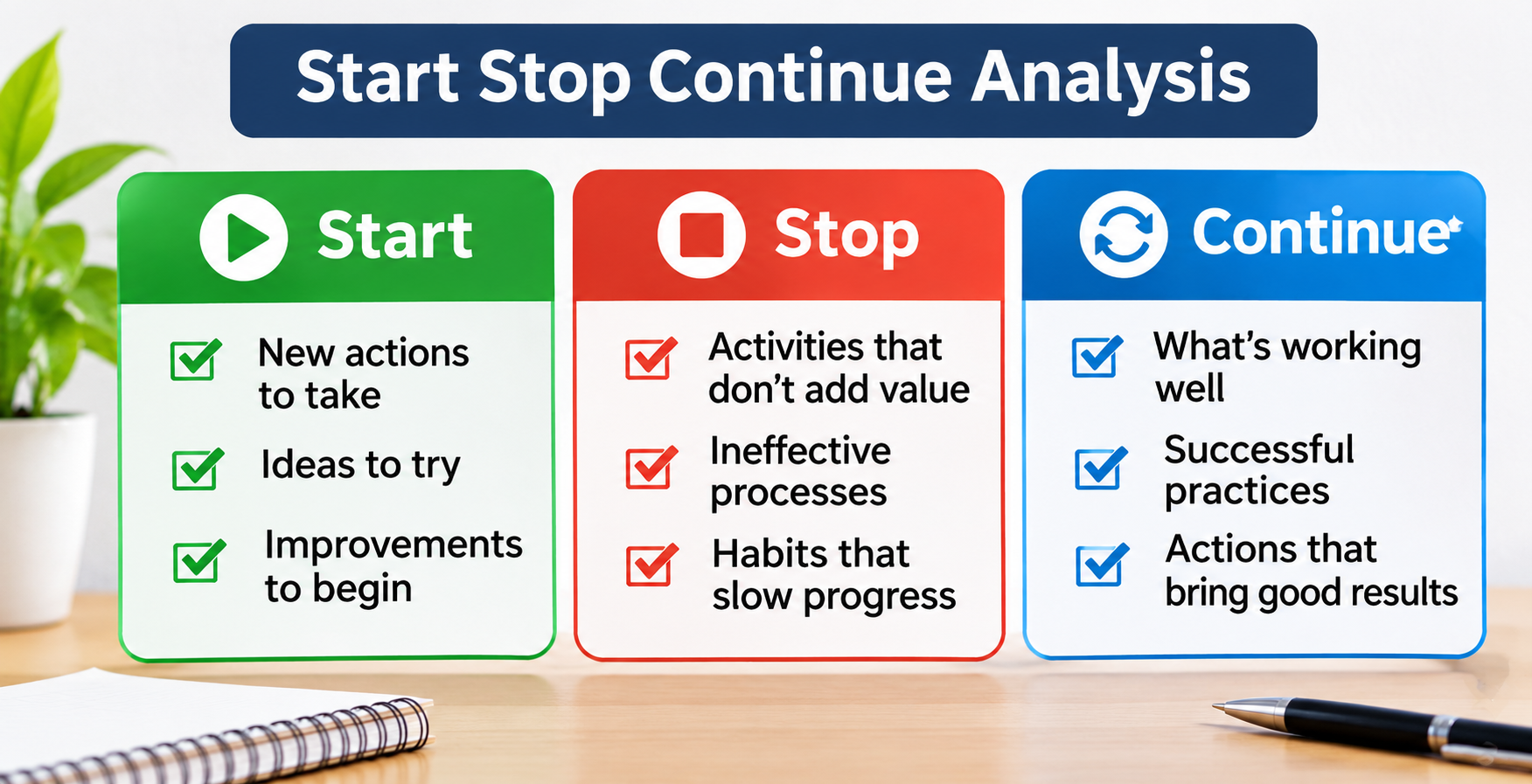
Start Stop Continue Analysis is a practical feedback method used to improve performance, strengthen teamwork, and encourage positive changes. It helps individuals, teams, and organizations identify which activities they should begin, eliminate, or maintain to achieve better results.
This simple framework is popular in business meetings, employee evaluations, project reviews, and personal development because it encourages constructive conversations and actionable feedback.
What Is Start Stop Continue Analysis?
Start Stop Continue Analysis is a structured evaluation technique that divides feedback into three categories: Start, Stop, and Continue.
Each category focuses on a different aspect of improvement.
Start: Identify new actions, behaviors, or strategies that could improve results.
Stop: Recognize ineffective activities, habits, or processes that create unnecessary challenges.
Continue: Highlight successful practices that should remain part of daily operations.
By examining these three areas, teams can develop practical improvement plans without making the feedback process complicated.
Why Is Start Stop Continue Analysis Important?
Organizations frequently face communication difficulties, inefficient workflows, and changing performance expectations.
A Start Stop Continue Analysis provides a straightforward way to address these challenges.
It encourages employees to share ideas, identify problems, and recognize achievements.
The framework also promotes accountability because participants discuss specific actions rather than focusing entirely on personal opinions.
When applied regularly, it can improve communication, productivity, and overall team satisfaction.
How to Conduct a Start Stop Continue Analysis
A successful analysis requires clear objectives and honest participation.
1. Identify the Main Objective
Begin by deciding what you want to evaluate. This could include employee performance, customer service, project management, or team communication.
A clearly defined objective keeps the discussion relevant.
2. Collect Feedback
Ask participants to suggest actions for each category. Encourage thoughtful responses based on actual experiences.
Anonymous feedback can sometimes help employees express concerns more comfortably.
3. Organize the Suggestions
Group similar comments together and identify common themes.
Focus on recommendations that are realistic, measurable, and relevant to organizational goals.
4. Create an Action Plan
Assign responsibilities, establish deadlines, and decide how progress will be measured.
Review the results periodically to determine whether the recommended improvements are effective.
Start Stop Continue Analysis Examples
Consider a marketing team reviewing its monthly performance.
Start:
- Conduct weekly planning meetings.
- Use customer feedback to improve campaigns.
- Share progress reports across departments.
Stop:
- Scheduling unnecessary meetings.
- Delaying important project decisions.
- Repeating tasks that could be automated.
Continue:
- Recognizing employee achievements.
- Monitoring campaign performance.
- Encouraging creative collaboration.
These examples demonstrate how a simple feedback exercise can produce meaningful improvements.
Benefits of Start Stop Continue Analysis
The main advantage of this framework is its simplicity.
It requires minimal preparation and works effectively with small teams, large organizations, and individual employees.
It also balances constructive criticism with positive recognition, helping participants understand both their weaknesses and strengths.
Furthermore, regular evaluations can identify problems before they become serious obstacles.
Conclusion
Start Stop Continue Analysis is an effective tool for improving productivity, teamwork, and organizational performance.
By identifying what to start, what to stop, and what to continue, individuals and businesses can make informed decisions and establish achievable goals.
Consistent feedback, clear responsibilities, and regular progress reviews make this framework especially valuable for long-term improvement.
