
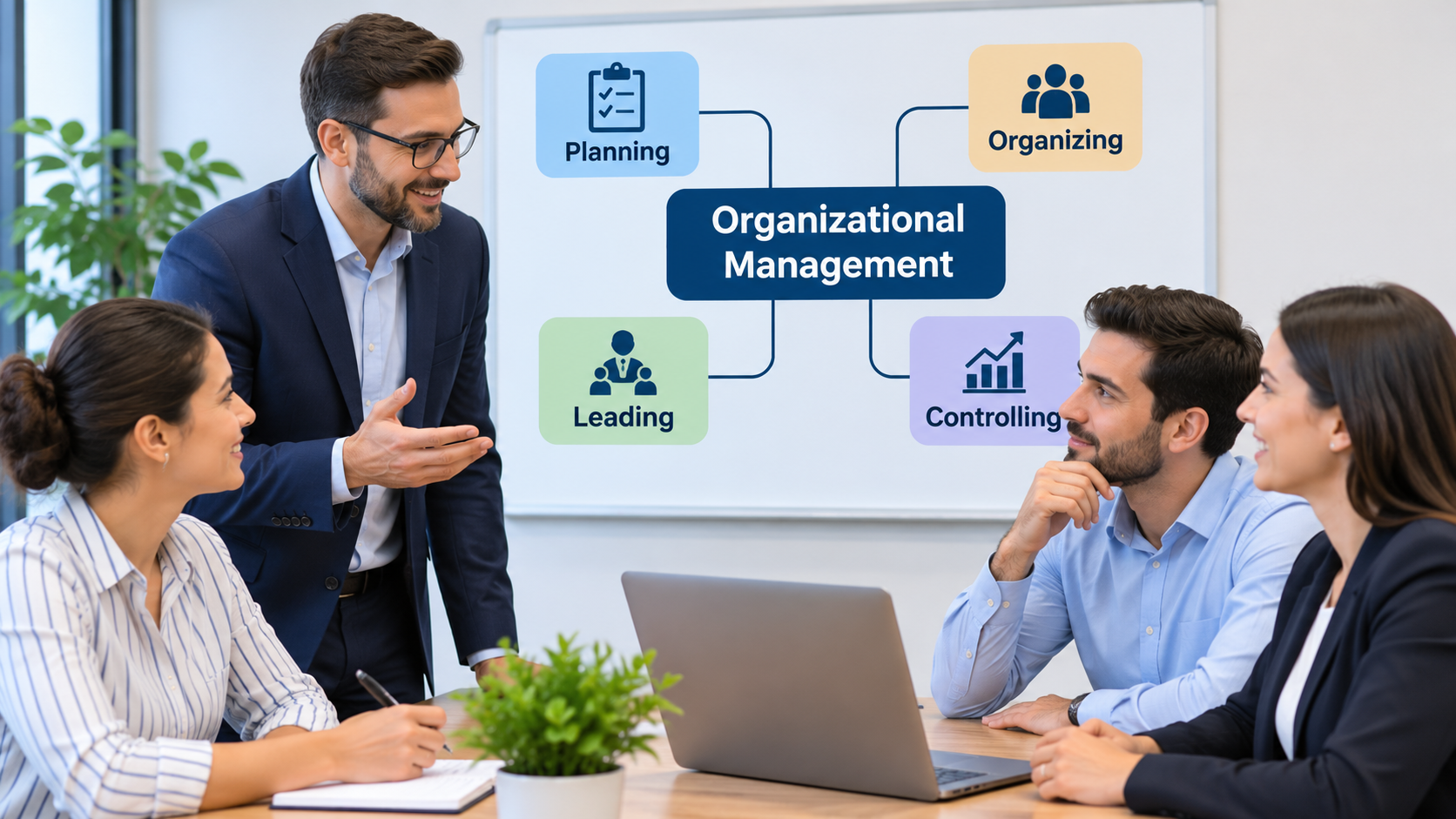
Understanding what is organizational management is essential for anyone interested in business leadership, workplace productivity, or successful company operations. Organizational management involves planning, organizing, leading, and controlling resources to achieve specific business goals.
Every organization, whether a small startup or a large corporation, needs effective management to operate smoothly. Strong organizational management helps businesses improve teamwork, manage resources, and maintain long-term growth.
What Is Organizational Management?
Organizational management is the process of coordinating people, activities, and resources to achieve an organization’s objectives efficiently and effectively.
It includes developing business strategies, assigning responsibilities, supervising employees, and evaluating performance.
Managers use organizational management principles to ensure that different departments work together toward shared goals.
For example, a retail company may use organizational management to coordinate inventory, customer service, employee schedules, and financial planning.
Four Main Functions of Organizational Management
Organizational management typically includes four essential functions.
1. Planning
Planning involves setting goals and identifying the steps needed to achieve them.
Managers analyze business conditions, develop strategies, and allocate resources according to organizational priorities.
Effective planning reduces uncertainty and helps employees understand their responsibilities.
2. Organizing
Organizing focuses on arranging resources, tasks, and employees into an effective working structure.
This includes creating departments, assigning duties, and establishing reporting relationships.
A well-organized workplace helps reduce confusion and improve efficiency.
3. Leading
Leading involves motivating, guiding, and supporting employees.
Successful leaders communicate expectations clearly, encourage collaboration, and create a positive working environment.
Leadership also includes resolving conflicts and helping team members develop professionally.
4. Controlling
Controlling means monitoring performance and comparing actual results with established objectives.
Managers use performance indicators, reports, and employee feedback to identify areas needing improvement.
When problems arise, they implement corrective actions to keep operations on track.
Why Is Organizational Management Important?
Effective organizational management provides several benefits.
- Improved productivity: Employees understand their tasks and work more efficiently.
- Better decision-making: Managers use information and performance data to make informed choices.
- Stronger teamwork: Clear communication encourages cooperation between departments.
- Efficient resource allocation: Businesses reduce waste and use available resources effectively.
- Business growth: Strategic planning supports expansion and long-term success.
Without effective management, organizations may experience communication problems, duplicated responsibilities, and declining performance.
Types of Organizational Management
Organizations use different management approaches depending on their structure and goals.
Strategic management focuses on long-term objectives and competitive positioning.
Operations management oversees daily activities, workflows, and production processes.
Human resource management deals with employee recruitment, training, performance, and workplace relationships.
Change management helps organizations adapt to new technologies, business conditions, and internal restructuring.
These approaches often work together to improve overall organizational performance.
Skills Required for Effective Organizational Management
Successful organizational managers need strong communication, leadership, problem-solving, and decision-making skills.
Time management and adaptability are equally important because workplace priorities can change quickly.
Managers must also understand how to motivate employees, delegate responsibilities, and evaluate results fairly.
Technology skills have become increasingly valuable as businesses rely on digital tools for communication, project management, and performance tracking.
Examples of Organizational Management in the Workplace
A manufacturing company may improve productivity by reorganizing production schedules and assigning responsibilities more clearly.
Similarly, a hospital may coordinate medical teams, equipment, and patient services through effective management practices.
These examples demonstrate what is organizational management in everyday business operations.
Ultimately, organizational management creates a structured approach to achieving goals while supporting employees, improving efficiency, and maintaining organizational success.
