

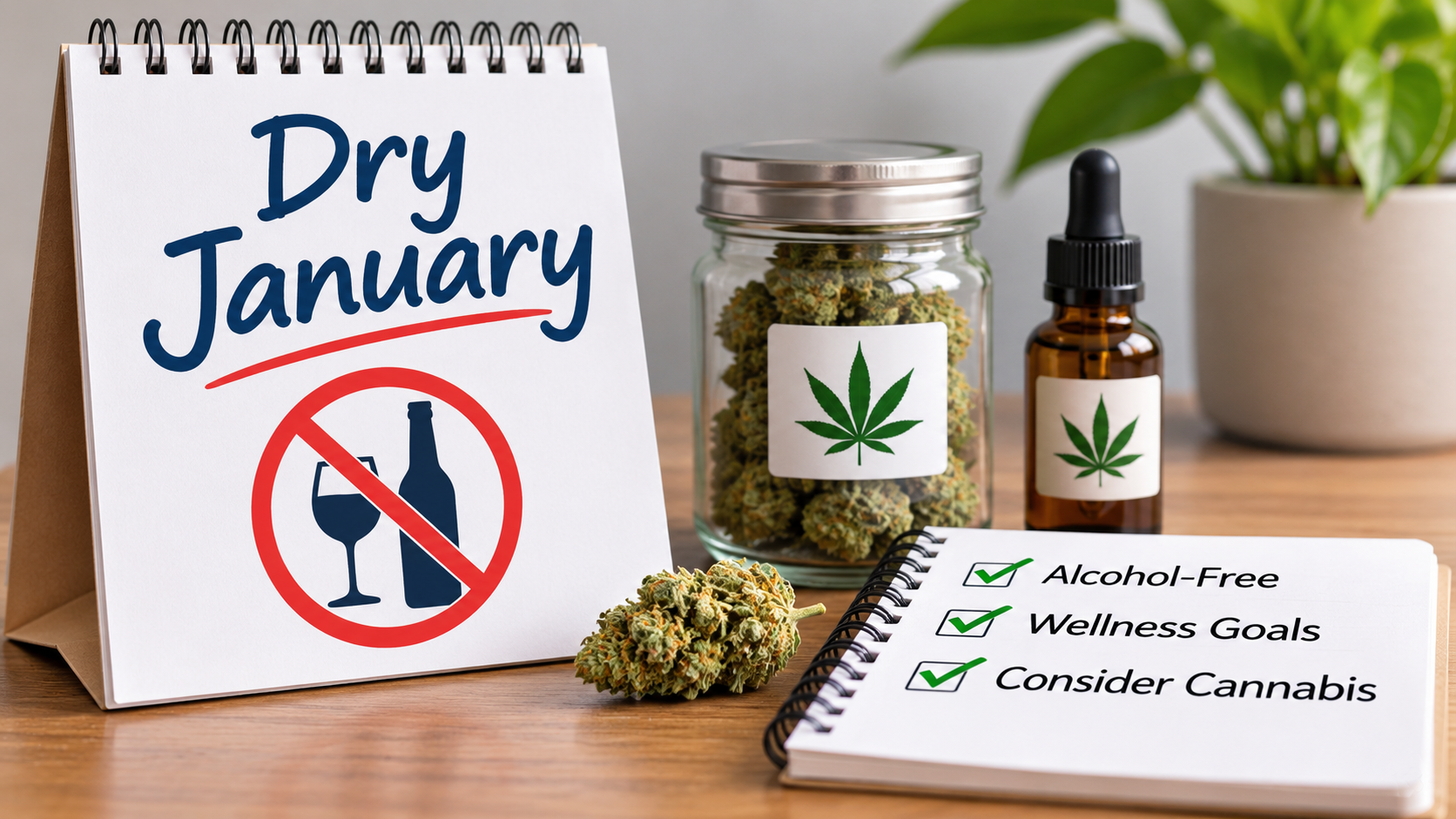
Dry January cannabis is gaining attention as more adults explore alternatives to alcoholic drinks during the first month of the year. While Dry January traditionally encourages people to avoid alcohol for 31 days, some participants consider cannabis products as substitutes for their usual alcoholic beverages.
This growing interest raises important questions about health, safety, and whether cannabis supports the goals of an alcohol-free lifestyle.
What Is Dry January Cannabis?
Dry January is a wellness challenge that encourages people to stop drinking alcohol throughout January.
The purpose is to reconsider drinking habits, improve personal well-being, and develop healthier routines.
The term dry january cannabis describes the practice of using cannabis while participating in this alcohol-free challenge.
Some individuals call this approach “California sober,” which generally means avoiding alcohol while continuing cannabis use.
However, being alcohol-free does not necessarily mean being free from intoxicating substances.
Why Are People Exploring Cannabis During Dry January?
Several factors contribute to interest in cannabis during alcohol-free challenges.
Some adults want alternatives to traditional alcoholic beverages during social gatherings.
Others are interested in understanding whether cannabis could help them reduce alcohol consumption.
Cannabis-infused beverages have also attracted attention because they offer a drink format similar to conventional cocktails.
Nevertheless, personal experiences vary considerably, and cannabis should not automatically be considered a healthier replacement.
Can Cannabis Help Reduce Alcohol Consumption?
Researchers have started examining whether cannabis can influence drinking behavior.
A 2026 study from the University at Buffalo found that some cannabis beverage users reported drinking less alcohol after introducing cannabis-infused drinks.
However, other research has associated cannabis use with increased simultaneous drinking.
These findings suggest that cannabis may affect alcohol consumption differently depending on the individual.
There is currently insufficient evidence to recommend cannabis as a reliable treatment for alcohol dependence.
Potential Risks of Using Cannabis During Dry January
Although some individuals view cannabis as an alternative to alcohol, its use carries important health risks.
THC, the primary intoxicating compound in cannabis, can affect memory, concentration, coordination, and decision-making.
Some users experience anxiety, paranoia, or uncomfortable psychological effects.
Frequent cannabis consumption can also lead to dependence.
Smoking cannabis may harm the lungs, while edible products can produce delayed and unpredictable effects.
Cannabis can impair driving ability and should be avoided during pregnancy and breastfeeding.
Healthier Alternatives for Dry January
People participating in Dry January have several non-intoxicating options available.
Alcohol-free sparkling drinks, flavored water, herbal teas, and creative mocktails can make social occasions enjoyable without alcohol.
Regular exercise, relaxation techniques, and improved sleep routines may also support personal wellness goals.
Keeping track of drinking habits can help participants recognize patterns and make lasting lifestyle changes.
People who drink heavily or regularly may need medical guidance before stopping alcohol because withdrawal can be dangerous.
Is Dry January Cannabis Right for Everyone?
Choosing cannabis during Dry January is a personal decision, but it requires careful consideration.
Individuals should understand potential health consequences, medication interactions, and applicable local laws.
Those seeking complete sobriety may prefer avoiding both alcohol and cannabis.
The most appropriate approach depends on personal goals, health conditions, and professional medical guidance.
Conclusion
Dry January cannabis reflects growing interest in alternative approaches to reducing alcohol consumption.
Although early research suggests cannabis may help some people drink less, its long-term benefits and risks require further investigation.
Ultimately, Dry January offers an opportunity to evaluate personal habits and make informed decisions about health and well-being.
