

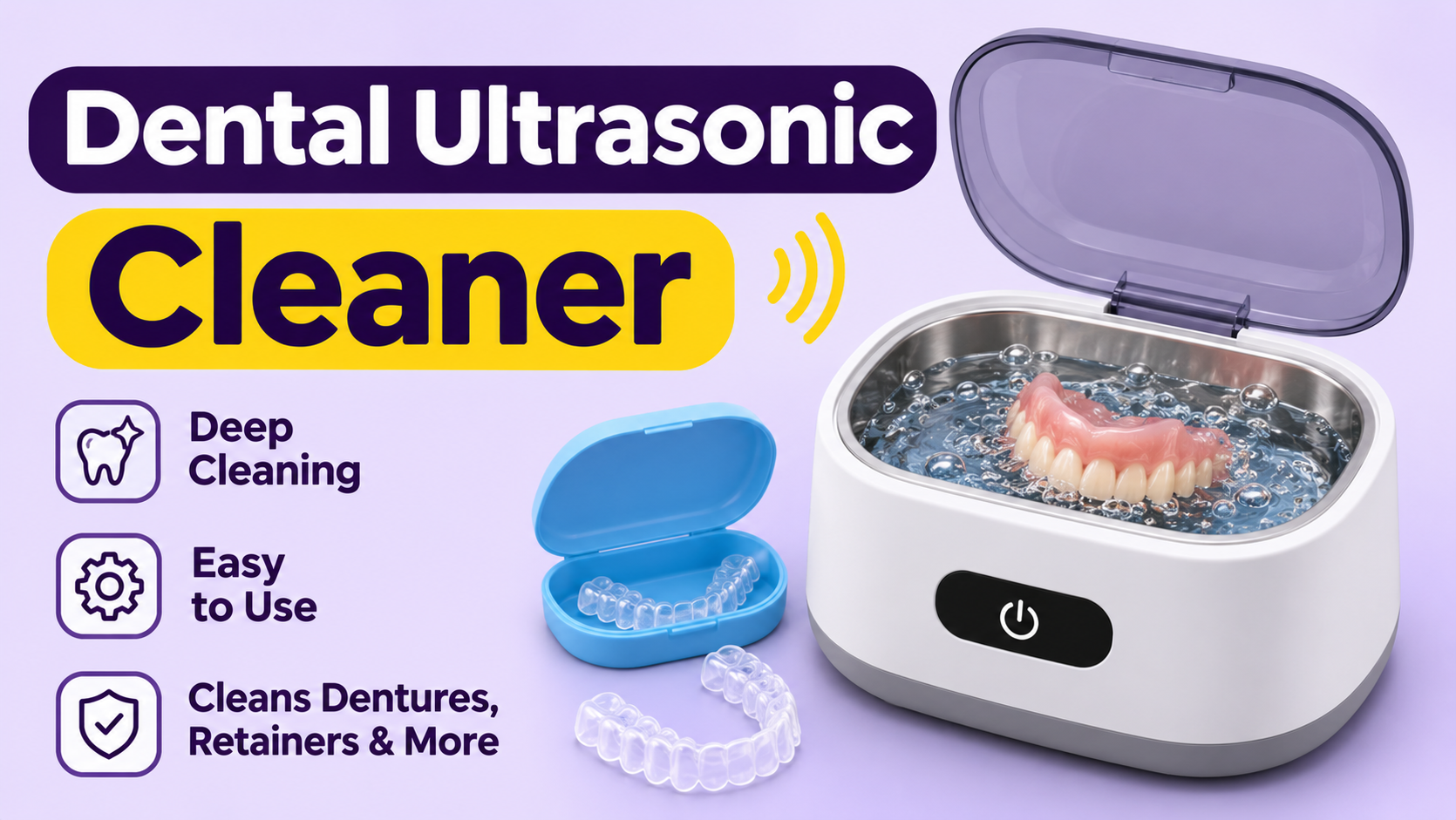
Keeping dental appliances clean is essential for maintaining good oral hygiene. A dental ultrasonic cleaner offers a convenient way to remove food particles, plaque deposits, and debris from removable dental appliances. Using high-frequency sound waves, this device reaches areas that can be difficult to clean manually. Whether you wear dentures, retainers, or mouthguards, understanding how ultrasonic cleaning works can help you choose a suitable device.
What Is a Dental Ultrasonic Cleaner?
A dental ultrasonic cleaner is an electronic device that uses ultrasonic vibrations to clean dental appliances and instruments.
It usually consists of a water tank, ultrasonic transducer, and control system.
Unlike traditional brushing, ultrasonic cleaning uses sound waves transmitted through liquid to loosen unwanted deposits.
These devices are commonly used in dental clinics, laboratories, and homes.
However, ultrasonic cleaning does not automatically sterilize an item or replace every recommended cleaning method.
How Does a Dental Ultrasonic Cleaner Work?
Ultrasonic cleaners operate through a process called cavitation.
High-frequency sound waves create microscopic bubbles within the cleaning liquid.
These bubbles rapidly form and collapse, helping dislodge debris from appliance surfaces.
The process can reach small grooves and difficult areas that ordinary brushing may miss.
Cleaning performance depends on the device, cleaning solution, cycle duration, and material being cleaned.
Benefits of Using a Dental Ultrasonic Cleaner
1. Effective Cleaning
Ultrasonic cleaning can help remove accumulated debris and plaque from suitable dental appliances.
Research suggests that ultrasonic cleaning may improve denture cleanliness, particularly when combined with an appropriate cleanser.
2. Convenient Operation
Many home ultrasonic cleaners offer simple controls and automatic cleaning cycles.
Users can place compatible appliances inside the tank and follow the recommended cleaning instructions.
3. Cleaning Hard-to-Reach Areas
Dentures and retainers often contain grooves and narrow spaces.
Ultrasonic vibrations can help loosen deposits in these areas without requiring aggressive scrubbing.
4. Useful for Different Appliances
Some ultrasonic cleaners accommodate dentures, removable retainers, nightguards, and other dental appliances.
Compatibility depends on the appliance material and manufacturer recommendations.
How to Use a Dental Ultrasonic Cleaner Safely
Begin by checking whether your dental appliance is suitable for ultrasonic cleaning.
Fill the tank according to the device instructions, using the recommended water level.
Add only a cleaning solution approved for the device and appliance, if required.
Place the appliance inside the designated basket or holder.
Run the recommended cleaning cycle without exceeding the specified duration.
After cleaning, rinse the appliance thoroughly when directed and allow it to dry appropriately.
Never immerse the electrical base or use flammable cleaning liquids.
How to Choose the Best Dental Ultrasonic Cleaner
When purchasing a dental ultrasonic cleaner, consider tank capacity, appliance compatibility, cleaning settings, and overall construction quality.
A removable basket can make handling dental appliances easier.
Automatic shutoff and straightforward controls are useful features for everyday convenience.
Check the manufacturer’s warranty, instructions, and customer feedback before purchasing.
Avoid choosing a device based solely on advertised cleaning power.
Is a Dental Ultrasonic Cleaner Worth Buying?
A dental ultrasonic cleaner can be a practical addition to an oral care routine for people who regularly wear removable dental appliances.
However, it should complement rather than replace brushing or other cleaning methods recommended by a dental professional.
Dental clinics must also sterilize reusable instruments when required, because ultrasonic cleaning alone does not make them sterile.
Choosing a reliable device and following proper cleaning instructions can help maintain cleaner appliances and support everyday oral hygiene.
