
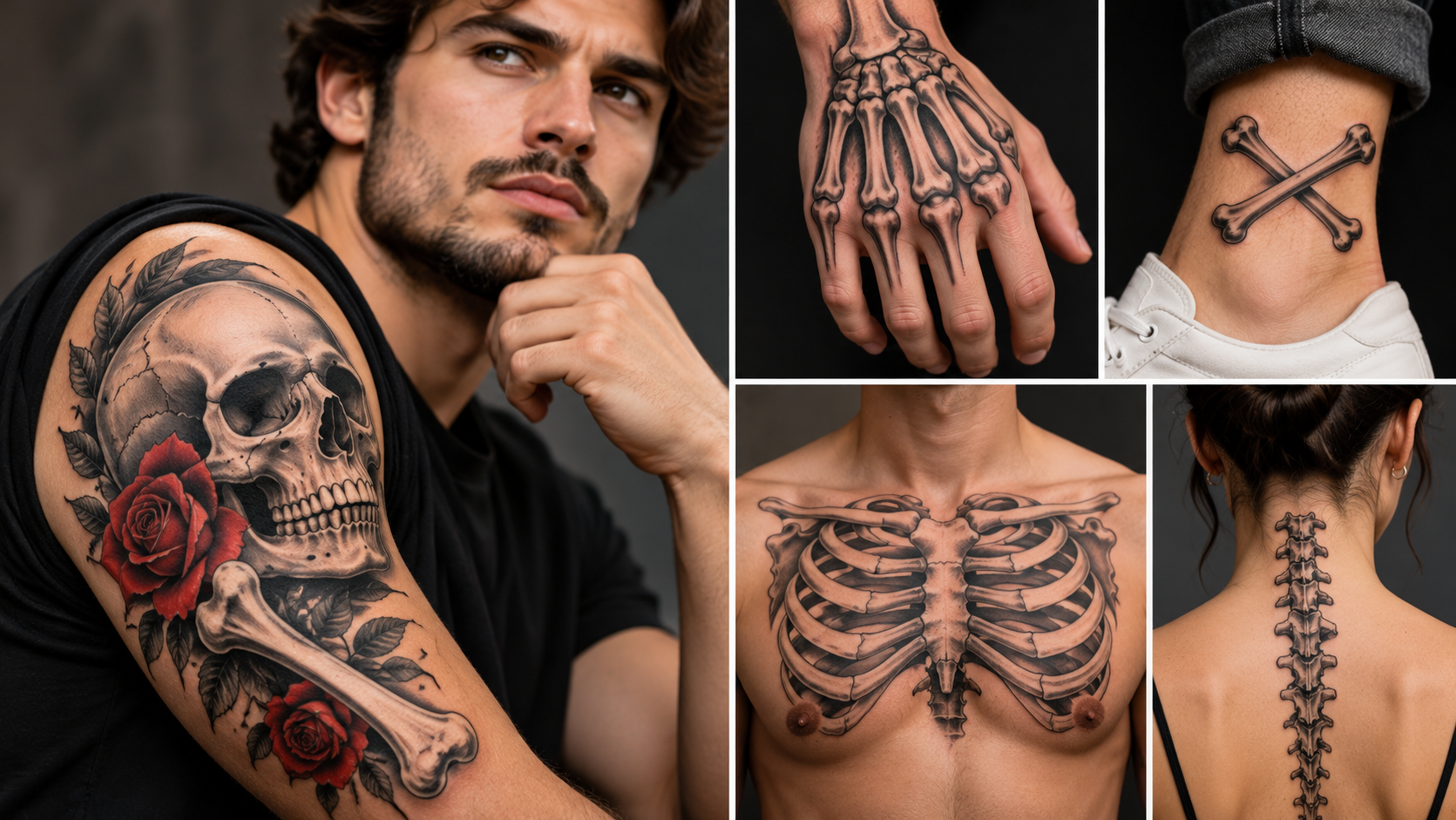
A bone tattoo is a striking form of body art that can represent strength, survival, mortality, or personal transformation. From realistic skeletal designs to simple minimalist outlines, bone tattoos offer creative possibilities for people who appreciate meaningful artwork.
Whether you’re considering your first tattoo or adding another design to your collection, understanding bone tattoo symbolism, styles, and placement options can help you make a confident decision.
What Does a Bone Tattoo Mean?
The meaning of a bone tattoo depends on its design and the personal experiences of the wearer.
Bones form the structural foundation of the human body, making them a natural symbol of strength and endurance.
Some people choose bone tattoos to represent overcoming difficulties, while others associate them with life, death, and renewal.
A bone design can also reflect an interest in anatomy, nature, or traditional tattoo artistry.
There is no single universal meaning, allowing individuals to create their own interpretations.
Popular Bone Tattoo Designs
Bone tattoos come in various styles, ranging from small symbols to detailed anatomical illustrations.
1. Realistic Bone Tattoo
Realistic designs feature carefully shaded bones resembling human anatomy.
Artists use fine lines, shadows, and detailed textures to create a three-dimensional appearance.
2. Minimalist Bone Tattoo
Minimalist designs use simple outlines and limited shading.
They are suitable for people who prefer subtle body art without complicated details.
3. Broken Bone Tattoo
A broken bone design can symbolize overcoming hardship, resilience, or recovery.
Some people incorporate flowers or meaningful dates to personalize the artwork.
4. Crossed Bones Tattoo
Crossed bones are commonly associated with pirate imagery and traditional tattoo culture.
Depending on the design, they may represent danger, rebellion, or mortality.
5. Dog Bone Tattoo
Dog bone tattoos are popular among animal lovers.
They may symbolize affection for a beloved pet or serve as a memorial for a dog.
Best Places to Get a Bone Tattoo
Choosing the right placement depends on the tattoo’s size, visibility, and complexity.
Popular locations include:
- Forearm: Suitable for long, detailed bone illustrations.
- Wrist: Ideal for small minimalist designs.
- Upper arm: Provides space for larger artwork.
- Leg: Works well for anatomical bone tattoos.
- Ankle: Suitable for subtle, compact designs.
Discuss placement with your tattoo artist to ensure the design fits naturally.
Does Getting a Bone Tattoo Hurt?
Tattoo pain varies depending on placement and individual sensitivity.
Areas with thin skin and less cushioning, including ankles, wrists, and ribs, may feel more uncomfortable.
A bone tattoo is applied to the skin, not directly onto the bone.
Choosing an experienced professional can help make the process more comfortable.
Bone Tattoo Aftercare Tips
Proper aftercare supports healthy skin healing and helps preserve tattoo details.
Follow your tattoo artist’s instructions, gently clean the area as directed, and use an appropriate moisturizer.
Avoid scratching, unnecessary friction, and prolonged sun exposure while the tattoo heals.
Seek medical advice if you experience worsening redness, spreading swelling, pus, or fever.
Final Thoughts
A bone tattoo combines artistic creativity with meaningful symbolism.
Whether you prefer a realistic skeleton illustration, a simple bone outline, or a personalized memorial design, the possibilities are extensive.
Select a style that reflects your personality, choose a suitable placement, and work with a qualified tattoo artist to create lasting artwork.
