

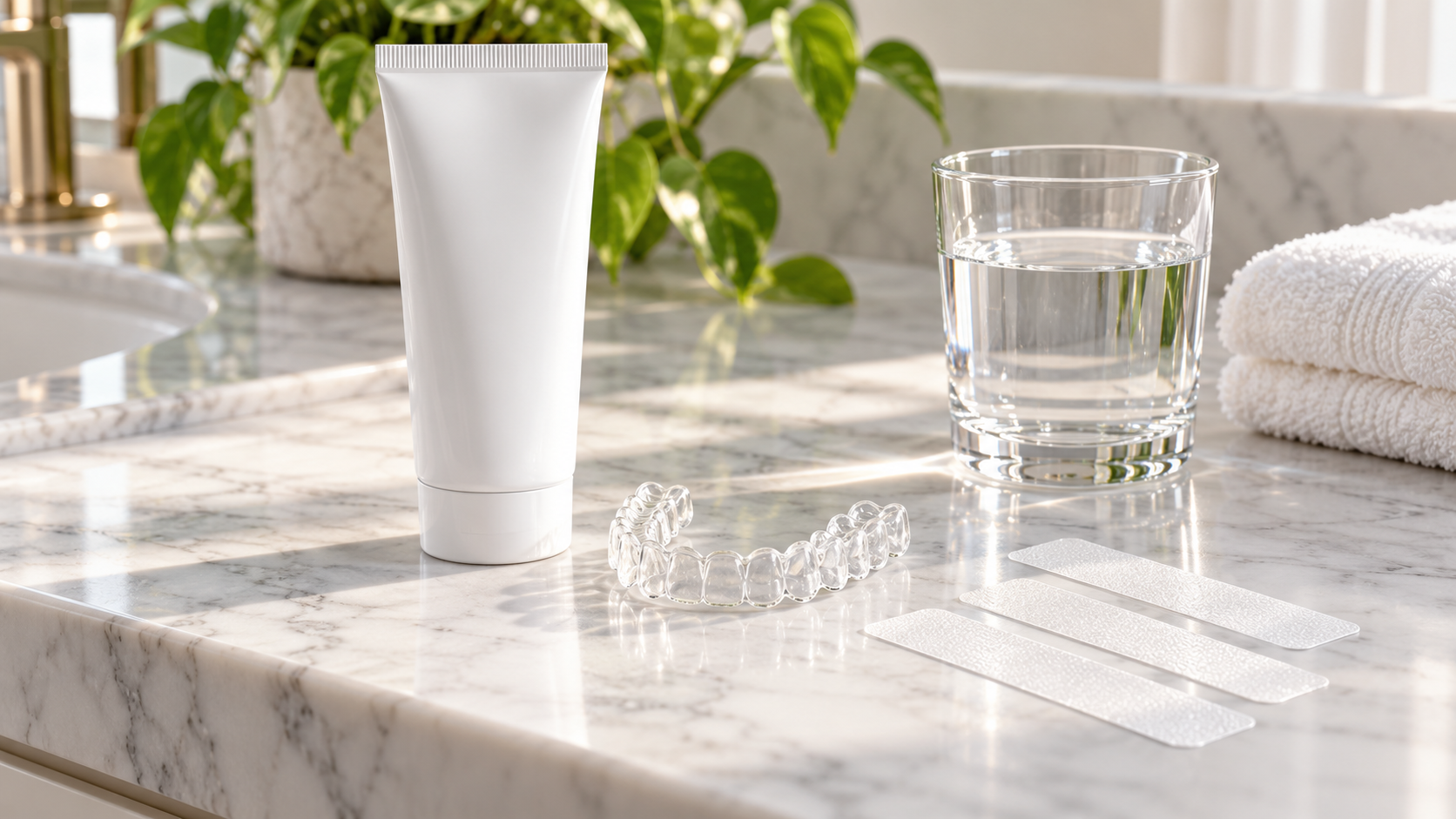
Choosing the best dental whitening products starts with understanding what you want to improve. Some products remove stains on the tooth surface, while others use peroxide to lighten the natural color beneath it. Your budget, schedule, sensitivity, and dental history all affect which option makes sense.
Whitening strips: convenient at-home bleaching
Whitening strips are thin, flexible pieces coated with peroxide gel. They sit directly on the teeth for a set period, making them simple to use without a tray.
Follow the product’s instructions carefully. Applying strips for longer or repeating treatment too soon can irritate gums or make teeth sensitive. When comparing options, look for the American Dental Association (ADA) Seal of Acceptance on the specific package. The seal indicates that a product has met the ADA’s safety and effectiveness requirements when used as directed.
Whitening toothpaste: best for surface stains
Whitening toothpastes usually help remove surface stains caused by coffee, tea, and other dark foods and drinks. Many use polishing ingredients; some contain a small amount of peroxide. They can be a straightforward choice for gradual maintenance, but they generally do not bleach teeth as much as strips or dentist-supervised treatments.
If whitening toothpaste causes discomfort, switch to a gentler option and ask a dental professional what may be behind the sensitivity.
Dentist-supervised options: custom trays or in-office care
A dentist can provide custom trays and whitening gel for home use or perform whitening in the office. Custom trays are shaped to fit your teeth, while office treatment offers professional supervision and may produce faster results. A dentist can also check for cavities, gum problems, and the cause of discoloration before treatment.
This step is especially useful if you have crowns, fillings, or implants. Whitening affects natural teeth, but dental restorations do not change color, so bleaching can make them look different from nearby teeth.
Ingredients and safety matter
Peroxide-based products can cause temporary tooth sensitivity or gum irritation. If symptoms are strong or persist, stop treatment and contact a dentist. People with existing dental problems or pronounced sensitivity should seek advice before starting a whitening kit.
Be cautious with charcoal powders, lemon juice, vinegar, and homemade scrubs. These methods lack reliable support as whitening treatments, and abrasive or acidic ingredients may wear down enamel.
How to choose
For mild surface stains, consider an ADA-accepted whitening toothpaste. For a stronger at-home effect, compare whitening strips that carry the Seal and follow the directions exactly. If you want faster treatment or have dental work or sensitivity, ask a dentist whether custom trays or in-office whitening suit your needs.
The best dental whitening products are not necessarily the strongest or most expensive. Choose one that targets your type of staining, fits your routine, and has a clear safety profile. Whitening results vary, and natural teeth are not all the same shade, so aim for a healthy-looking smile rather than an unrealistic color.
